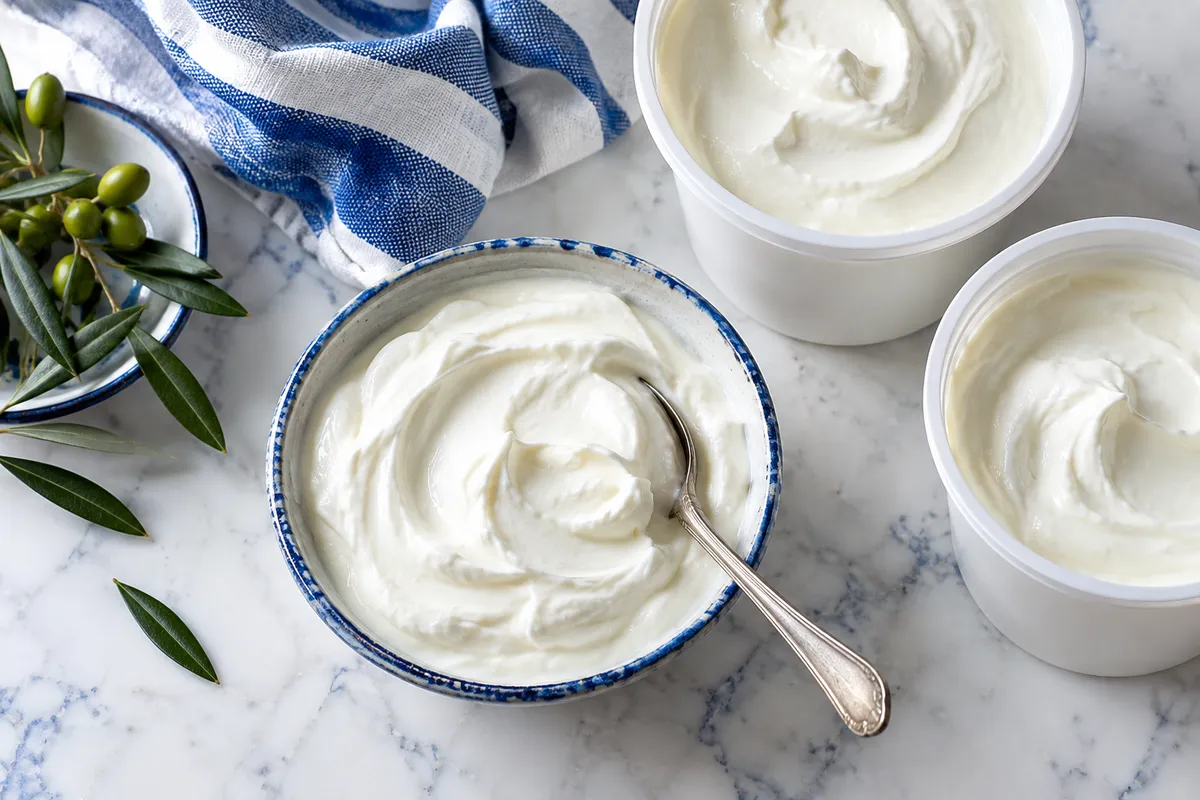
Greek yoghurt is a thick yoghurt used in sweet and savoury dishes. That simple description is more useful than many of the health claims attached to it. Different tubs can have very different ingredients and nutrition profiles, so buying a product with Greek on the label does not answer every question. Start with the kind of meal you want to make and then choose a tub that fits it.
Greek and Greek-style are shopping clues
Products may be thickened or prepared differently. Rather than trying to judge a yoghurt by its photograph or price, compare its ingredient list and nutrition table. Look for whether it is plain or sweetened, what milk it uses and whether other ingredients have been added. Neither a long nor a short ingredient list gives you the whole nutritional picture.
If protein is important to your choice, check the actual figure and the serving you use. Taste and texture also matter because the food needs to be enjoyable.
Choose a first use that fits your routine
Breakfast is an obvious option, but savoury meals are equally useful. Stir chopped herbs into a spoonful for a jacket potato, or serve a cucumber dip with bread and vegetables. A plain yoghurt gives more flexibility than a strongly flavoured dessert pot. Do not expect yoghurt alone to provide all the food needed for a meal. Adding oats, a starchy accompaniment or another suitable ingredient can make the meal more satisfying. You can start with a small tub while discovering what you actually use.
A practical example
Try yoghurt with oats and berries for breakfast, then mix another serving with grated cucumber and mint for dinner. Keep the cucumber dressing separate from the main tub so you can use the remaining plain yoghurt in another recipe. Check all ingredients for suitability and follow the manufacturer’s storage instructions.
Try it this week
Buy one plain yoghurt that meets your needs and plan two uses before opening it. Make one sweet and one savoury dish if you like both. Note the texture, taste and whether the pack size suits your household. A product that gets used is often better value than a large bargain tub that is left at the back of the fridge.
- Is it plain or sweetened?
- Does the label meet the need I am buying it for?
- Have I planned more than one use for the tub?
Keep the whole meal in view
Think about the job yoghurt is doing in the meal. A spoonful used as a dressing is different from a large bowl used for breakfast, and a dessert pot is different from a plain cooking ingredient. Other foods determine whether the meal is substantial and varied. A product can be convenient without needing to be described as a superfood.
If you do not enjoy yoghurt or cannot safely eat it, there are other ways to plan meals and calcium sources. These guides describe general adult food choices, not a personalised diet prescription. The examples assume suitable ingredients and no relevant allergy; adapt them to your own circumstances.
Persistent digestive symptoms should be assessed instead of being treated by repeatedly changing dairy products.
Check what worked
After using the yoghurt, notice whether the choice solved the practical problem you started with. For example, did the pack size fit your household, did the sauce improve dinner, or did a label comparison answer your question? Keep the choice that works and change the detail that does not.
You do not need to buy several new products at once. Small comparisons are easier to interpret when the rest of the meal stays familiar. If a recipe is enjoyable but inconvenient, simplify the preparation before rejecting it. If a food causes a possible reaction, seek appropriate advice rather than repeating the experiment.
Sources and further reading
Keep exploring
- Greek yoghurt nutrition: protein, calcium and label reading
- A flexible Greek yoghurt meal plan: breakfast, lunch and dinner
- Buying and storing Greek yoghurt: a practical shopping guide
- Greek yoghurt, digestion and health claims: what to check
- Three easy Greek yoghurt ideas for breakfast and savoury meals
Keep exploring the practical questions.
Explore the guides